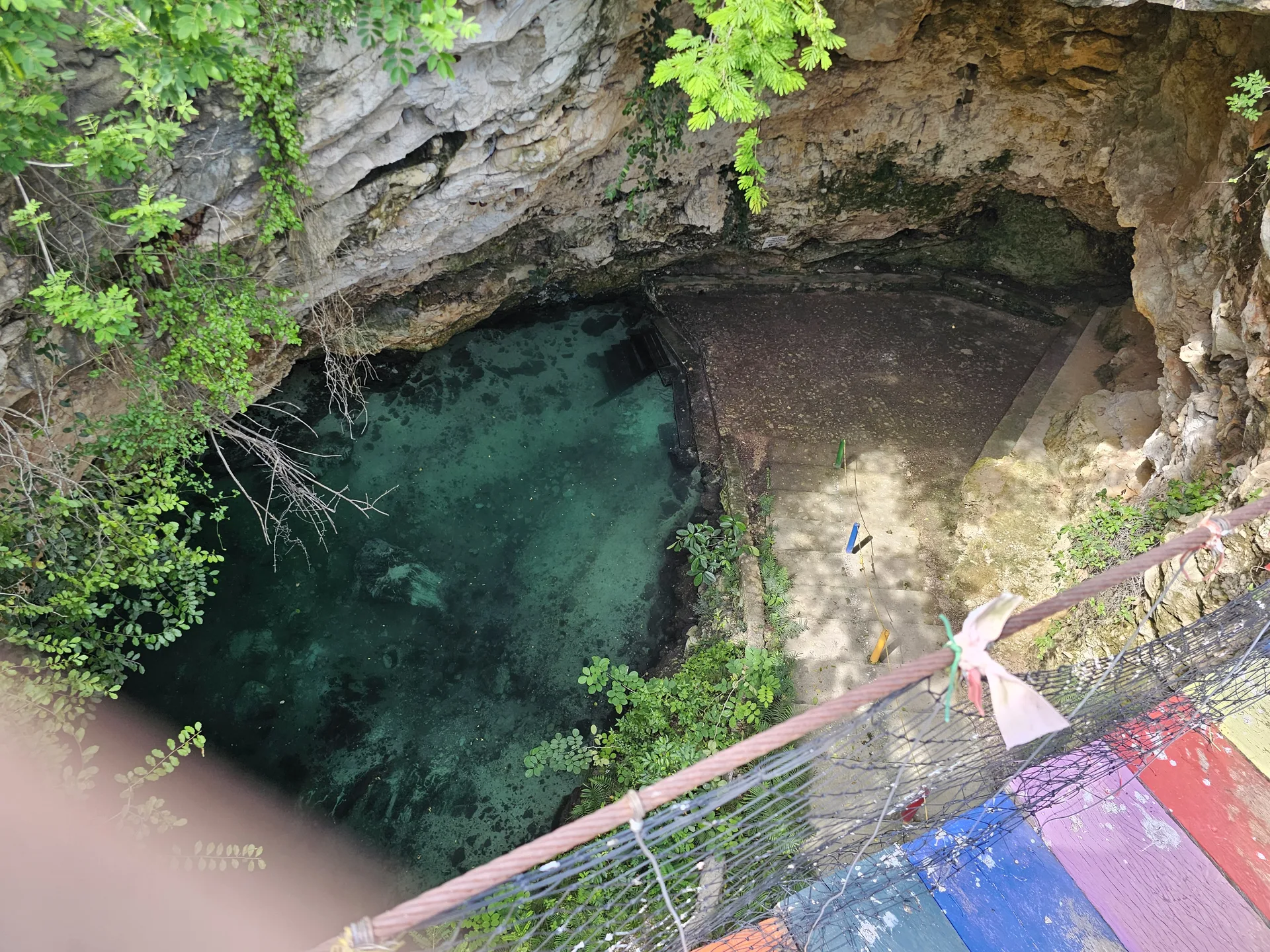
The Yucatan Peninsula holds a geological quirk that exists nowhere else on earth: more than 10,000 freshwater cenotes scattered across the region, all created 66 million years ago by the same meteorite that ended the dinosaurs. This guide maps the full route — from the quietest cenotes in Yucatan state to the most spectacular in Quintana Roo — with what you need to plan it.
Why Yucatan has so many cenotes
Sixty-six million years ago a six-mile-wide meteorite hit what is now the Yucatan coast, creating the Chicxulub crater. The impact fractured the limestone shelf underneath the peninsula, and over time groundwater carved those fractures into thousands of caves and caverns. When a cavern roof collapses, a cenote is born. The result is the densest concentration of cenotes on the planet.
That history matters for your trip, because the cenotes closest to the crater rim look different from the ones further out — and that's what shapes the route below.
Zone 1 — The cenote ring: Homun and Cuzama
The cenote ring is the most underrated part of the route. This circular band, more than 60 miles across, traces the crater rim and holds the highest density of accessible cenotes in the peninsula. No lines, no prices inflated by mass tourism, and water in colors that photos don't quite reach.
For travelers, the center of the ring is Homun and Cuzama, 45 and 50 minutes from Merida respectively.
Homun — 20+ cenotes within 3 miles
Homun is the most cenote-dense town in Yucatan. Its three main parks offer genuinely different experiences — underground, open, semi-open, with a colonial hacienda, with a zip-line, with ATVs — so you can build the exact kind of day you want.
| Cenote | Type | Price | Best for |
|---|---|---|---|
| Santa Rosa | Underground + open | $19 USD | Budget, authenticity |
| Santa Bárbara | 4 different cenotes | $35 USD | Families, variety |
| Santa Cruz | Hacienda + underground | $36 USD | History + nature |
| Santa Cruz + ATV | Cenote + adventure | $55 USD | Active travelers |
Cuzama — the horse-cart cenotes
Cuzama's three underground cenotes are reached by a small cart pulled by a horse along the rails of an old henequen plantation. It costs roughly $15–20 USD including the ride. The descents are by steep wooden ladders, so it's not for everyone, but nothing else on the peninsula works like it.
Zone 2 — Valladolid: the famous ones
Two hours east of Merida, Valladolid is home to the cenotes that show up in every ranking: Ik Kil, the circular open cenote with vines dropping to the water, and the Dzitnup pair (Xkekén and Samulá), both underground with a single beam of light hitting the surface.
Entry runs about $8–10 USD each. The trade-off is crowds — Ik Kil sits next to Chichén Itzá and absorbs its tour-bus traffic. Go at opening or late afternoon.
Zone 3 — Riviera Maya: Playa del Carmen and Tulum
The cenotes here are a different animal. Instead of the open, emerald-green pools of the ring, the Riviera Maya sits on the longest underwater cave system in the world, so its cenotes are mostly underground and a deeper turquoise blue.
Cenotes Casa Tortuga near Tulum is the most efficient stop: five cenotes of different types in one park, from $45 USD. Gran Cenote is the easiest to visit independently at about $30 USD, and Dos Ojos is the destination for cave divers, part of a documented system running more than 50 miles.
Planning by how many days you have
- 1 day: Homun from Merida. Two or three cenotes, lunch in the village, back by evening.
- 3 days: Day 1 Homun, day 2 Valladolid plus Chichén Itzá, day 3 Tulum cenotes. Doable but tight.
- 5–7 days: The full route without rushing — Merida as a base for the ring, then move east to Valladolid, then the coast, ending in Cancun or Tulum.
Go west to east: start with the quiet cenotes of the ring while they still feel like a discovery, then work toward the famous ones. Doing it in reverse makes Homun feel like an afterthought, when it's often the part people remember most.
Cenotes are cash businesses across the whole route, and ATMs in small towns are unreliable — carry pesos. Only biodegradable sunscreen is allowed in the water. Water shoes are worth packing; limestone stairs get slick.
Starting the route in Merida?
Homun is the first stop and the one most travelers skip. We run small-group tours there with local bilingual guides. Book on WhatsApp, pay cash on the day.