Tulum stopped being a secret a while ago. It's now one of the most visited places in Mexico, and for good reason: Maya ruins perched over the Caribbean, white-sand beaches, jungle, and — the part we care most about — some of the most striking cenotes on the Riviera Maya. This guide helps you use your time well without falling into the usual tourist traps.
The best cenotes in Tulum
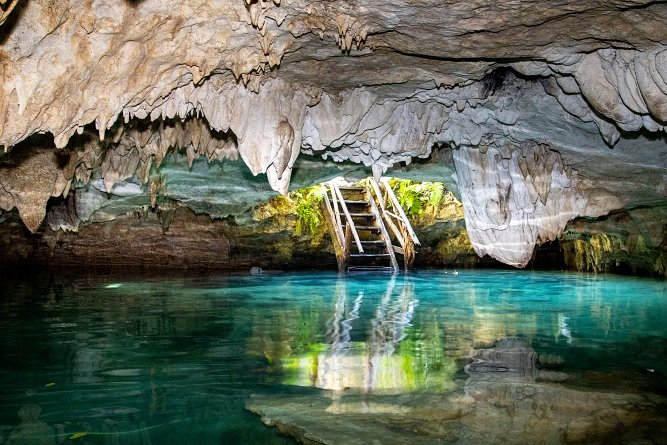
Tulum's cenotes are a different animal from the ones inland. Where Homun's are mostly open-air with emerald water, Tulum sits on the longest underwater cave system in the world, so its cenotes tend to be underground, deep turquoise, and feel like exploring a flooded cave.
Cenotes Casa Tortuga — the most complete
Casa Tortuga is our first recommendation for anyone visiting Tulum. The park has five genuinely different cenotes: two underground with stalactites and three open, including a river-style cenote that doesn't exist anywhere else nearby.
What makes it work is the progression — you can start in the darkest cavern and end in the brightest open pool, all in one visit. The packages let you pick your activity level, from a quiet swim to kayaking, zip-lining and ATVs.
| Package | Price | Includes |
|---|---|---|
| Basic | $45 USD | 5 cenotes + guide + snorkel gear |
| Silver | $59 USD | Above + taco buffet + loungers |
| Gold | $99 USD | Above + kayaks + zip-line + drinks |
| Off Road | $105 USD | ATV + 6 cenotes including an exclusive one |
Gran Cenote — the easiest to reach on your own
Three miles from the town center, Gran Cenote is the simplest to visit independently. It's semi-open, hung with stalactites, and turtles swim in the clear water. The downside is crowds. Entry is about $30 USD, open 8 AM to 5 PM. Go right at opening.
Dos Ojos — for divers
One of the most famous cave-diving sites in the world. The Dos Ojos system runs more than 50 documented miles of underwater passages. Diving requires certification; snorkeling is open to anyone and still gets you into the cavern zones.
The Tulum ruins
The only major Maya site built on a cliff above the sea, which is exactly why it photographs the way it does. The site itself is compact — 90 minutes covers it — and there's very little shade.
Go at 8 AM when it opens. By 10 the tour buses from Cancun and Playa del Carmen arrive and the temperature climbs fast. Entry is around $6–8 USD.
Beaches
Playa Paraíso is the classic postcard beach and the easiest to access. Playa Ruinas sits below the archaeological site with the ruins as a backdrop. Playa Las Palmas is quieter and free, further down the hotel strip. Note that the hotel zone beaches are mostly fronted by clubs charging a minimum consumption.
Sargassum seaweed is a real consideration between roughly April and August. It varies week to week — check recent reports rather than planning around an average.
Itineraries
- 1 day: Ruins at 8 AM, beach until lunch, one cenote in the afternoon.
- 2 days: Day 1 ruins and beach. Day 2 a full cenote park like Casa Tortuga.
- 3 days: Add a diving or snorkeling trip at Dos Ojos, or a day trip to the Sian Ka'an biosphere reserve.
Getting around
Tulum town and the hotel zone are about 2.5 miles apart. Bicycles are the local default and rent for roughly $8–10 USD a day. Taxis have no meters — agree the fare before getting in, and expect $8–15 USD for most rides within Tulum. Colectivo vans run along the highway toward Playa del Carmen for a couple of dollars.
Cenotes are cash businesses. Only biodegradable sunscreen is allowed in the water — regular sunscreen is refused at the entrance. Water shoes are worth packing for the limestone stairs.
Want the Tulum cenotes handled for you?
We run Casa Tortuga tours with a bilingual guide, entry and gear included. Book on WhatsApp, pay cash on the day.